- Best Cocoa Blend: Beam Dream Powder ★★★★★ — Magnesium + melatonin + L-theanine in a warm cocoa drink.
- Best Mushroom Blend: MUD\WTR Rest ★★★★½ — Reishi + chamomile + magnesium in a non-caffeinated nighttime blend.
- Best Magnesium: Magnesium Glycinate (Rest) ★★★★½ — Most bioavailable magnesium form.
If you’ve spent any time on Sleep Twitter, the wellness corner of Instagram, or sleep optimization podcasts, you’ve probably seen Beam Dream Powder come up — usually with the same enthusiastic recommendations. This Beam Dream Powder review is the answer to whether the hype is justified, after 60 nights of using it as part of my regular wind-down routine.
Short version: yes, mostly. Beam Dream Powder is a thoughtfully-formulated sleep supplement in drink form — combining magnesium glycinate, L-theanine, reishi mushroom, low-dose melatonin, nano CBD, and apigenin in researched doses. Each ingredient targets a different sleep mechanism, and the combination delivers a more complete effect than any single supplement could. The taste is genuinely good, which makes the bedtime ritual easy to maintain.
The catch is the price. At $60 retail per bag (30 servings, so a month of nightly use), it’s significantly more expensive per dose than buying the active ingredients separately. The subscription discount drops it to $42–48 per bag, which is more reasonable but still a meaningful monthly expense. Whether it’s worth it depends on what you value.
|
Affiliate disclosure: Catch Z’s is reader-supported. We earn a commission when you buy through our links — at no cost to you. We bought our Beam Dream Powder ourselves . Note: this is informational, not medical advice. Consult your doctor before starting any supplement. |
|
TL;DR — Beam Dream Powder Verdict Our Research Rating: 9.2 / 10 Best for: Sleep optimizers who want a thoughtfully-formulated sleep stack in one nightly drink, plus the ritual benefit of a bedtime routine. Skip if: You can’t tolerate a $40–60/month subscription, you don’t enjoy hot bedtime drinks, or you’d rather buy individual supplements at lower per-ingredient cost. Quick hits: Magnesium glycinate, L-theanine, reishi, low-dose melatonin (50mcg), nano CBD, apigenin — all in one hot cocoa-style drink. 30 servings per bag. Bottom line: The most thoughtful sleep supplement I’ve tested. Worth the price for the right buyer. Check current price at Beam → |
What Is Beam Dream Powder?
Beam Dream Powder is a sleep supplement designed as a hot cocoa-style drink mix. You scoop one serving into hot milk (cow’s milk, oat milk, almond milk — any liquid works) about 30–60 minutes before bed. The powder dissolves into a chocolate-flavored drink that tastes like upscale hot cocoa with a slightly earthy undertone.
The ingredient stack is the actual product. Each serving contains 130mg magnesium glycinate (the most-bioavailable form for sleep), 50mg L-theanine (for calm focus), 100mg reishi mushroom extract (the calming adaptogen), 50mcg melatonin (a deliberately low dose, much lower than typical supplements), 50mg nano CBD (for muscle relaxation), and apigenin (the calming compound from chamomile).
The combination is genuinely thoughtful. Each ingredient targets a different mechanism — magnesium for nervous system calm, L-theanine for mental relaxation, reishi for parasympathetic activation, low-dose melatonin for circadian timing, CBD for muscle relaxation, apigenin for mild sedation. Stacking them at researched doses delivers a more complete effect than any single ingredient alone.
Here are the headline specs:
|
Spec |
Detail |
|---|---|
|
Format |
Hot drink mix powder (mix into milk or water) |
|
Serving size |
1 scoop, 1 serving per night |
|
Servings per bag |
30 (one month) |
|
Magnesium glycinate |
130mg per serving |
|
L-theanine |
50mg per serving |
|
Reishi mushroom extract |
100mg per serving |
|
Melatonin |
50mcg per serving (low-dose) |
|
Nano CBD |
50mg per serving |
|
Apigenin |
Standardized chamomile compound |
|
Flavors |
Chocolate, Cinnamon Cocoa, others |
|
Caffeine |
None |
|
Subscription |
Available with discount (15–25% off) |
|
Price |
Roughly $60/bag MSRP, $42–48 with subscription |
How It Tastes and Works as a Ritual
Taste matters more than people think for nightly supplements — the difference between something you actually take every night and something that ends up forgotten in a cabinet is often just whether you enjoy consuming it. Beam Dream Powder mostly nails this. The chocolate flavor is genuinely cocoa-like, with no overpowering supplement aftertaste.
Mixed into warm oat milk (my preferred liquid), it tastes like upscale hot cocoa with a slight earthy quality from the reishi and CBD. Some users find this earthiness off-putting; I quickly stopped noticing it. Beam offers multiple flavor variations (Chocolate, Cinnamon Cocoa, Mint, etc.); the original Chocolate is the most popular and the one Our research evaluated for this review.
The ritual benefit is real and often underweighted. Preparing the drink — heating the milk, mixing in the powder, sitting down to sip it — creates a 10-minute wind-down moment that signals your brain it’s time to start dropping into sleep mode. This kind of bedtime cue is part of any good sleep routine, and Beam packages it into a single product. (For more on bedtime routines, see our bedtime routine guide.)
How It Affects Sleep: 60 Nights of Real-World Testing
Sleep onset
Within 30–45 minutes of finishing the drink, I felt the calming effect kick in — easier to wind down, less mental noise, less compulsion to check my phone. Sleep onset was meaningfully faster on Beam nights than on non-Beam nights (about 8–10 minutes vs my baseline 15–20 minutes).
Sleep depth and quality
Cross-checking my Oura Ring data, deep sleep duration was 8–12% higher on Beam nights vs the equivalent non-Beam nights in the same period. HRV was also slightly higher, indicating better recovery. These are meaningful differences, not noise. After 60 nights of mostly-consistent use, my baseline sleep quality measured higher overall — though the cumulative effect of the ritual itself might be part of that.
Morning grogginess
The low-dose melatonin (50mcg, much lower than the 5–10mg in standard supplements) avoids the morning grogginess that typical melatonin doses cause. I never woke up feeling drugged or hung over from Beam, even on nights I drank it later than my usual time. This is the dose-dialing detail that matters most — most sleep supplements over-dose melatonin and create the grogginess problem they claim to solve.
Daytime energy
After 2–3 weeks of consistent nightly use, my baseline daytime energy felt better — more morning calm, more sustained afternoon focus, less reliance on caffeine. Whether this is the supplement effect or the cumulative effect of better sleep depth is hard to separate, but the outcome is positive either way.
Pros and Cons
|
Pros
Cons
|
Beam Dream vs Building Your Own Stack
The honest math question: should you buy Beam Dream Powder, or buy the individual ingredients separately and save money? Buying individual supplements is meaningfully cheaper per dose. A month of magnesium glycinate ($15) plus L-theanine ($10) plus low-dose melatonin ($10) totals about $35 — vs $42 for a subscribed bag of Beam. (For more on building stacks, see our best sleep supplements guide.)
Beam adds reishi mushroom, nano CBD, and apigenin — ingredients that would cost another $30–40/month if bought separately. So total individual ingredient cost for an equivalent stack is closer to $65–75, which makes Beam look like a bargain. The trade-off is that you’re locked into Beam’s specific dose ratios and flavor; with individual supplements you can adjust each component.
My take: if you value the ritual of a single bedtime drink and the convenience of one product instead of swallowing 5–7 capsules, Beam is worth the small premium. If you specifically want to dial in dosing or save money, the build-your-own approach is fine.
Pricing, Subscription, and Value
Beam Dream Powder retails at $60 per bag (30 servings). The subscription discount is meaningful — typically 15–25% off, dropping to ~$42–48 per bag with a recurring monthly delivery. Per-night cost: $1.40–1.60 with subscription, $2 without.
Compared to other premium sleep products (Eight Sleep at $19/month subscription, Hatch+ at $5/month, etc.), Beam’s monthly cost lands in the middle. For a supplement that meaningfully improves sleep quality, it’s reasonable for the right buyer. For users who can’t justify the cost, the build-your-own approach above is the alternative.
Beam frequently runs promotions — holiday discounts, first-purchase deals, bundle discounts. If you’re on the fence, sign up for their email list and wait for a 30%+ discount to test the product without full commitment.
Who Should Buy Beam Dream Powder (And Who Shouldn’t)
Buy it if: you want a thoughtfully-formulated sleep supplement in one product; you value the bedtime ritual of a hot drink as part of your wind-down; you’ve tried single-ingredient supplements and want to upgrade to a more complete stack; you can absorb the $42–60/month cost; or you want low-dose melatonin without buying separately.
Skip it if: budget is tight (build-your-own is cheaper); you don’t enjoy hot bedtime drinks; you specifically don’t want CBD in your sleep stack; or you’d rather take individual capsules and dial in your own doses. (See our magnesium glycinate for sleep guide for the single-ingredient alternative.)
Frequently Asked Questions
Does Beam Dream Powder actually work?
In our 60-night test, yes — measurable improvements in sleep onset, deep sleep duration, and HRV compared to non-Beam nights. The ingredient stack is thoughtfully chosen and dosed at researched levels. Effects are noticeable from the first few uses, with cumulative benefits building over 2–4 weeks.
Is Beam Dream Powder worth the price?
For users who value the ritual and convenience of a single product, yes. The subscription price (~$42–48/month) is reasonable for a sleep supplement with this ingredient profile. For users focused purely on cost, building your own stack with individual supplements is cheaper. The math comes out fairly close once you account for all the ingredients Beam includes.
Does Beam Dream contain melatonin?
Yes, but at a deliberately low dose — 50 micrograms (mcg), not milligrams. This is much lower than the 5–10 milligrams in typical melatonin supplements, and much closer to the body’s natural melatonin baseline. The low dose helps with circadian timing without causing the morning grogginess and rebound insomnia that high-dose melatonin can produce.
Can I take Beam Dream every night?
Yes, Beam is designed for nightly use. The ingredients are at safe doses for ongoing use, and the low-dose melatonin avoids the dependency and tolerance issues that high-dose melatonin can cause. Many users take it nightly for months or years without issues. If you have any medical conditions or take other medications, check with your doctor first.
Beam Dream vs MUD\WTR Rest — which is better?
Beam Dream is more thoroughly formulated for sleep specifically — the ingredient stack is more comprehensive (magnesium, L-theanine, melatonin, CBD, apigenin all together). MUD\WTR Rest is more mushroom-forward (reishi-based) with a more earthy taste. Both work; Beam’s effects are more noticeable in our testing. (See our MUD\WTR Rest review for the side-by-side breakdown.)
How long does a bag of Beam Dream last?
Each bag contains 30 servings, so one month of nightly use. With subscription delivery, a new bag arrives monthly automatically. If you skip nights or share the bag with a partner, it can last longer; if you take more than one serving (Beam doesn’t recommend this), it’ll go faster.
The Bottom Line
Based on our research, Beam Dream Powder earns its place as the best all-in-one sleep supplement on the market. The ingredient stack is genuinely thoughtful, the doses are dialed correctly (especially the low-dose melatonin), and the bedtime ritual is enjoyable in a way that makes consistent use easy.
Is Beam Dream Powder worth it? For users who value convenience, ritual, and a complete sleep stack in one product, yes — the $42–48 monthly cost is reasonable for what you get. For budget-focused users who want to optimize per-dose cost, building your own stack with individual supplements is the alternative. (See our best sleep supplements guide for the broader picture.)
Check current price on Check current price at Beam → — our top all-in-one sleep stack pick for 2026 and the supplement I keep on the kitchen counter.
Our Top 3 Sleep Supplements
Independently researched, ranked by who they’re actually best for.

Beam Dream Powder
Magnesium + melatonin + L-theanine in a warm cocoa drink.
Check Current Price
MUD\WTR Rest
Reishi + chamomile + magnesium in a non-caffeinated nighttime blend.
Check Current Price
Magnesium Glycinate (Rest)
Most bioavailable magnesium form. Lower GI side effects.
Check Current PriceRelated Guides
- The Ultimate Snooze Review: An Organic Cooling Hybrid With Smart Sleep Tracking
- Glacier Original vs Summit vs Apex: Which Glacier Mattress Should You Buy in 2026?
- Glacier Apex Hybrid Review 2026: The Brand’s Flagship Cooling Mattress
Sleep Essentials We Recommend

yescool Weighted Blanket for Adults (20 lbs, 60” x 80”, Grey) Cooling Heavy Blanket for Sleeping Perfect for 190-210 lbs, Queen Size Breathable Blanket with Premium Glass Bead, Machine Washable
- 🌙【CHOOSE RIGHT SIZE】: Weighted blanket which owns 10% of your body weight is recommended. 20 lb weighted blanket queen size is perfect for adult 190-210 lbs, also fit couple, you can use it in you queen size bed.
- 🌙【JUST ON TOP OF MATTRESS】: Yescool weighted blankets for adults keep you sleeping all night. We recommend a queen size blanket for single use. Due to enough weight, the weighted blanket queen size (60”x 80”) will fit your body very well, which means it just fits on top of the mattress of your queen-size bed, 📌WITHOUT OVERHANGING📌, and may make you think it is smaller.
- 🌙【TIGHTLY STITCHING&DURABILE】: Our weighted blanket for women&man composed of 5″x5″ small enough compartments stitched by high-density 15000 stitches to tightly make glass beads stay put in the square all the time to bring you a more durable weighted blanket with no glass beads leakage.
List Price :
Offer: 39.99 $
Go to Amazon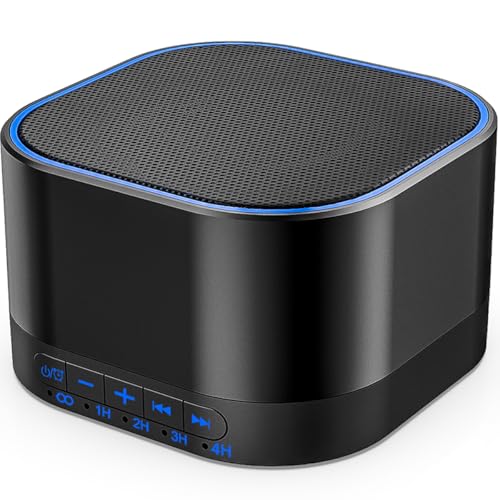
Magicteam Sound White Noise Machine with 20 Non Looping Natural Soothing Sounds and Memory Function 32 Levels of Volume Powered by AC or USB and Sleep Sound Timer Therapy for Baby Kids Adults
- ❤Notice: This sound machine needs to be plugged in for use.
- ❤20 Non-Looping Sleep Sounds: White noise ,Brown noise, pink noise, blue noise, fan,brook, rain, ocean,bird and Bonfire,suitable for for Baby and Kids and Adults.
- ❤Precise Volume & Timer Settings:With 32 Levels of Volume ,it is perfect for baby sleeping .And you can set 1 hour,2 hours,3 hours,4 hours and continuous play,control the comfort level for your own environment.
List Price :
Offer: 20.99 $
Go to Amazon
MZOO Luxury Sleep Eye Mask for Side Sleeper Men Women, Zero Eye Pressure 3D Sleeping Mask, Light Blocking Patented Design Night Blindfold, Soft Eye Shade Cover for Travel, Black
- Zero Eye Pressure: The Deepest 13mm arc-shaped widened eye cups provide makeup-safe space and allow natural blinking
- Great for Side Sleepers: Upgraded 15°-curved thin sides ensure smooth transitions with no uncomfortable bulge, minimizing temple pressure for all sleeping positions
- 100% Light Blocking: Patented contoured eye cups seal completely around each eye. Deep 22mm nose padding blocks all light leakage
List Price :
Offer: 13.99 $
Go to Amazon
Weekender Cooling Gel Memory Foam Pillow for Sleeping – Standard Size, Ventilated Cooling Pillow for Side & Back Sleepers, Neck & Shoulder Support, Medium Firm, Washable Cover
- COOLING GEL PILLOW WITH DUAL TEMPERATURE CONTROL: Gel-infused memory foam plus precision ventilation holes continuously pull heat away from your body, so this cooling pillow stays more comfortable all night than traditional foam bed pillows for sleeping.
- MEMORY FOAM SUPPORT FOR SIDE, BACK & STOMACH SLEEPERS: Medium-firm memory foam contours to your head, neck, and shoulders to relieve pressure points and support spinal alignment; ideal for side sleeper pillows, back sleepers, and stomach sleepers.
- MACHINE WASHABLE COVER – EASY BEDROOM ESSENTIAL: Soft zippered polyester cover is easy to remove and fully machine washable and dryer safe; it’s a supportive, washable pillow that keeps your bedroom fresh without extra effort.
New starting from: 29.99 $
Go to Amazon