- Best Cocoa Blend: Beam Dream Powder ★★★★★ — Magnesium + melatonin + L-theanine in a warm cocoa drink.
- Best Mushroom Blend: MUD\WTR Rest ★★★★½ — Reishi + chamomile + magnesium in a non-caffeinated nighttime blend.
- Best Magnesium: Magnesium Glycinate (Rest) ★★★★½ — Most bioavailable magnesium form.
If you’ve decided to try sleep supplements but you’re confused about which one to start with, you’re in good company. The melatonin vs magnesium vs L-theanine question is the most common starting point for sleep supplementation, and the answer matters because each one targets different mechanisms. Picking the wrong one for your specific issue will leave you disappointed; picking the right one (or stacking them correctly) can meaningfully improve your sleep within weeks.
Short version: these three are the most evidence-backed sleep supplements on the market, and each one solves a different part of the sleep puzzle. Magnesium glycinate handles general nervous system calm and sleep depth. L-theanine handles bedtime anxiety and racing thoughts. Low-dose melatonin handles circadian timing issues. The most-effective approach for most users is a combination — magnesium plus L-theanine for nightly use, with melatonin added only when circadian disruption is the issue.
This guide explains how each supplement works, what doses to take, when to use which one, and how to combine them safely. By the end, you’ll know exactly which supplement (or combination) addresses your specific sleep issue.
|
Affiliate disclosure: Catch Z’s is reader-supported. We earn a commission when you click product links — at no cost to you. Note: this article is informational, not medical advice. |
|
TL;DR — Melatonin vs Magnesium vs L-Theanine Magnesium glycinate: Best for general sleep depth and quality. The default sleep supplement. L-theanine: Best for anxiety-driven sleep issues. Reduces racing thoughts at bedtime. Melatonin (low-dose): Best for circadian rhythm issues. Jet lag, shift work, delayed sleep phase. Best stack for most users: Magnesium glycinate (300mg) + L-theanine (200mg) before bed. Add 0.3–0.5mg melatonin only if you have circadian timing issues. Check current price at Rest → |
How Each Supplement Targets Sleep Differently
Sleep is not a single biological process — it involves multiple pathways, neurotransmitters, and timing systems. Different supplements target different parts of the sleep apparatus, which is why they all have a place in a well-designed sleep stack.
Magnesium glycinate works through the GABA system. GABA is the brain’s primary calming neurotransmitter, and magnesium helps GABA work more effectively. The result is reduced nervous system arousal, which makes it easier to fall asleep and stay in deeper sleep stages. Magnesium is also involved in melatonin production, muscle relaxation, and cortisol regulation — so its effects are broad and cumulative.
L-theanine works through alpha brain wave promotion. Alpha waves are associated with calm, focused mental states (like meditation). When you take L-theanine, alpha waves increase, which has a paradoxical effect of making you mentally calm without sedating you. For users whose sleep problem is mental (racing thoughts, anxiety, can’t shut off the brain at bedtime), L-theanine targets that specific issue better than any other supplement.
Melatonin works through circadian timing. Your pineal gland naturally produces melatonin in the evening, which signals your body that it’s time to sleep. Supplemental melatonin reinforces this signal — particularly useful when your circadian rhythm is out of sync (jet lag, shift work, delayed sleep phase). At low doses (0.3–0.5mg), melatonin shifts your sleep timing without causing morning grogginess; at high doses (5–10mg, which most over-the-counter products contain), it can cause more problems than it solves. (For more on broader sleep biology, see our sleep cycles explained guide.)
Side-by-Side: Melatonin vs Magnesium vs L-Theanine
|
Supplement |
Best For |
Dose |
Onset Time |
Side Effects |
|---|---|---|---|---|
|
Magnesium glycinate |
Sleep depth, calm, muscle relaxation |
200–400mg |
Builds over 1–2 weeks |
Minimal at standard doses |
|
L-theanine |
Anxiety, racing thoughts at bedtime |
100–200mg |
30–60 minutes |
Essentially none |
|
Melatonin (low-dose) |
Circadian rhythm, jet lag, shift work |
0.3–0.5mg |
30–60 minutes |
Mild grogginess at higher doses |
|
All three combined |
Comprehensive sleep stack |
300mg + 200mg + 0.3mg |
30–60 minutes |
Minimal at proper doses |
Magnesium Glycinate: The Foundation
Magnesium glycinate is the foundation of any sleep stack. It’s the most well-researched, broadly-effective single sleep supplement on the market, with multiple peer-reviewed studies showing measurable improvements in sleep onset, sleep depth, and overall sleep quality. (For the deep dive on dosing and selection, see our magnesium glycinate for sleep guide.)
Standard dose: 200–400mg of elemental magnesium, taken 30–60 minutes before bed. Start at 200mg for 1–2 weeks, then adjust upward if needed. Most users do well at 300mg; some find 400mg too much (mild loose stools is the only meaningful side effect at higher doses).
Effects build over 1–2 weeks. Don’t expect dramatic effects on night one — magnesium replenishes a deficiency state that most adults have, and the cumulative effect is what produces the sleep improvement. After 2 weeks of consistent use, sleep onset, depth, and morning grogginess all measurably improve for most users. Magnesium is well-tolerated, safe at standard doses, and one of the highest-leverage health interventions available — sleep is just one of its many benefits.
L-Theanine: For Anxiety-Driven Sleep Issues
L-theanine is the second-most-evidence-backed sleep supplement, with research support for both sleep onset improvement and reduction in nighttime anxiety. The standard dose is 100–200mg taken 30–60 minutes before bed. The effect is felt within that 30–60 minute window — calm clarity, reduced mental noise, less compulsion to check your phone or worry about tomorrow.
L-theanine is the right pick when your sleep problem is mental rather than physical. Users who can’t fall asleep because their brain won’t quiet down at bedtime, who wake up at 3am with racing anxious thoughts, or who feel hyperaroused even when physically tired — L-theanine targets all of these. It’s also useful as a daytime supplement for stress and focus, but the bedtime application is the most sleep-relevant.
Side effects are essentially nonexistent at standard doses. L-theanine is naturally found in tea, has a long history of safe use, and doesn’t cause grogginess, dependency, or withdrawal. It’s the safest sleep supplement available and one of the most effective for anxiety-related sleep issues.
Melatonin: For Circadian Rhythm Issues
Melatonin is the most-talked-about sleep supplement and the most commonly misused. The doses sold in supermarkets (5–10mg) are 10–30 times higher than the body’s natural melatonin production. At those doses, melatonin can cause grogginess, vivid dreams, and rebound insomnia. Used correctly at low doses (0.3–0.5mg), melatonin is genuinely useful for circadian rhythm issues.
The right use case: jet lag, shift work, delayed sleep phase syndrome, or any situation where your sleep timing is out of sync with when you want to be asleep. Take 0.3–0.5mg melatonin 30–60 minutes before your target bedtime; the supplement nudges your circadian rhythm toward your target schedule. Within 3–7 nights, your timing usually adjusts. Once you’re synced, you can stop taking it.
The wrong use case: chronic insomnia where you’re falling asleep at the right time but having quality issues. For this, magnesium and L-theanine are better choices. Melatonin doesn’t address sleep quality — it addresses sleep timing.
If you do take melatonin, look for sublingual or fast-dissolving 0.3mg or 0.5mg products. Many “low-dose” melatonin products are actually 1mg, which is still much higher than your natural baseline. The truly low-dose options (Pure Encapsulations, Life Extension) deliver melatonin at the level your body actually produces, without the side effects of higher doses.
Stacking: How to Combine Them Safely
The most-effective stack for most users is magnesium glycinate (300mg) plus L-theanine (200mg), taken together 30–60 minutes before bed. These two work synergistically — magnesium calms the body, L-theanine calms the mind, and together they cover both sides of the sleep equation. (For the pre-blended option, see our Beam Dream Powder review.)
Add 0.3–0.5mg melatonin to the stack only if you have circadian timing issues. If you’re falling asleep at the right time but having quality issues, melatonin won’t help — and might cause problems. If your bedtime is shifting (jet lag, shift work) or you can’t fall asleep at the time you want to, melatonin is the right addition.
Other supplements that pair well with this core stack include valerian root (300–600mg, for severe anxiety), apigenin (50mg, the calming compound from chamomile), and reishi mushroom extract (calming adaptogen). The Beam Dream Powder includes most of these in pre-blended form, which simplifies dosing. Building your own stack lets you fine-tune but requires more capsules.
When to Take Which One
Use this decision tree to pick the right supplement for your specific issue:
If your problem is general poor sleep quality — waking up tired, not getting deep sleep, mild insomnia — start with magnesium glycinate alone. 90% of users see meaningful improvement within 2 weeks. If magnesium alone isn’t enough, add L-theanine for the second piece of the puzzle.
If your problem is mental — racing thoughts at bedtime, can’t shut off the brain, anxiety-driven insomnia — start with L-theanine. If you also have general sleep depth issues, add magnesium. Many users with anxiety-driven sleep issues benefit from the L-theanine + magnesium stack more than from either supplement alone.
If your problem is timing — you’re falling asleep at the wrong time, jet lag, shift work, can’t fall asleep until 2am no matter what — use melatonin first to reset your timing. Once you’re synced, transition to the magnesium + L-theanine stack for ongoing maintenance.
If your problem is severe and chronic, or if any of these supplements aren’t helping after 2–4 weeks of proper use, talk to a doctor. Underlying issues (sleep apnea, anxiety disorder, depression) can mimic supplement-responsive insomnia. (For broader sleep environment optimization, see our perfect sleep environment guide.)
Frequently Asked Questions
Magnesium or melatonin — which is better for sleep?
Magnesium glycinate is better for general sleep quality and depth. Melatonin is better for circadian timing issues (jet lag, shift work). For chronic sleep issues, magnesium is the right starting point. For occasional timing issues, low-dose melatonin (0.3–0.5mg) is the right pick.
Can you take L-theanine and magnesium together?
Yes — they work synergistically. L-theanine calms the mind, magnesium calms the body, and together they cover the most common sleep issues. The combination is one of the most-recommended sleep stacks among sleep researchers. Take 200mg L-theanine plus 300mg magnesium glycinate 30–60 minutes before bed.
Is melatonin safe to take every night?
Low-dose melatonin (0.3–0.5mg) is generally safe for nightly use, though most experts recommend using it specifically for circadian disruption rather than as a chronic sleep aid. Higher-dose melatonin (5–10mg) shouldn’t be taken nightly — it can cause grogginess, vivid dreams, and rebound insomnia. For chronic sleep needs, magnesium and L-theanine are better daily options.
Can L-theanine cause dependence?
No. L-theanine is non-habit-forming, has no withdrawal effects, and doesn’t build tolerance. It’s one of the safest sleep supplements available. You can take it nightly indefinitely without dependency concerns.
Is it safe to combine all three (melatonin + magnesium + L-theanine)?
Yes, at appropriate doses. Many sleep stack products (like Beam Dream Powder) combine all three deliberately. The combination addresses physical calm (magnesium), mental calm (L-theanine), and circadian timing (melatonin). At standard doses (300mg + 200mg + 0.3mg), the combination is well-tolerated by most users.
How long until these supplements start working?
L-theanine: first night, within 30–60 minutes. Low-dose melatonin: first night, within 30–60 minutes (for timing effects). Magnesium glycinate: cumulative effect builds over 1–2 weeks of consistent use. Don’t expect dramatic effects from magnesium on night one; stick with it for at least 2 weeks to evaluate.
The Bottom Line
If you only remember one thing from this guide: each supplement targets a different sleep mechanism, and matching the supplement to your specific issue is the key to actually getting results. Magnesium glycinate for general sleep quality. L-theanine for anxiety-driven insomnia. Low-dose melatonin for circadian rhythm issues.
For most users, the magnesium + L-theanine stack is the right starting point. Add melatonin only if circadian timing is the issue. (For more sleep supplement context, see our best sleep supplements guide, magnesium glycinate for sleep guide, and natural sleep aids guide.)
Stop guessing about supplements. Match the right one to your specific issue and the results follow.
Our Top 3 Sleep Supplements
Independently researched, ranked by who they’re actually best for.

Beam Dream Powder
Magnesium + melatonin + L-theanine in a warm cocoa drink.
Check Current Price
MUD\WTR Rest
Reishi + chamomile + magnesium in a non-caffeinated nighttime blend.
Check Current Price
Magnesium Glycinate (Rest)
Most bioavailable magnesium form. Lower GI side effects.
Check Current PriceRelated Guides
- Screen Time Before Bed: How Phones Wreck Your Sleep
- Best Bed Cooling Systems 2026: Active Cooling for Hot Sleepers
- Best Night Guards for Teeth Grinding 2026: Bruxism Solutions
Sleep Essentials We Recommend

yescool Weighted Blanket for Adults (20 lbs, 60” x 80”, Grey) Cooling Heavy Blanket for Sleeping Perfect for 190-210 lbs, Queen Size Breathable Blanket with Premium Glass Bead, Machine Washable
- 🌙【CHOOSE RIGHT SIZE】: Weighted blanket which owns 10% of your body weight is recommended. 20 lb weighted blanket queen size is perfect for adult 190-210 lbs, also fit couple, you can use it in you queen size bed.
- 🌙【JUST ON TOP OF MATTRESS】: Yescool weighted blankets for adults keep you sleeping all night. We recommend a queen size blanket for single use. Due to enough weight, the weighted blanket queen size (60”x 80”) will fit your body very well, which means it just fits on top of the mattress of your queen-size bed, 📌WITHOUT OVERHANGING📌, and may make you think it is smaller.
- 🌙【TIGHTLY STITCHING&DURABILE】: Our weighted blanket for women&man composed of 5″x5″ small enough compartments stitched by high-density 15000 stitches to tightly make glass beads stay put in the square all the time to bring you a more durable weighted blanket with no glass beads leakage.
List Price :
Offer: 39.99 $
Go to Amazon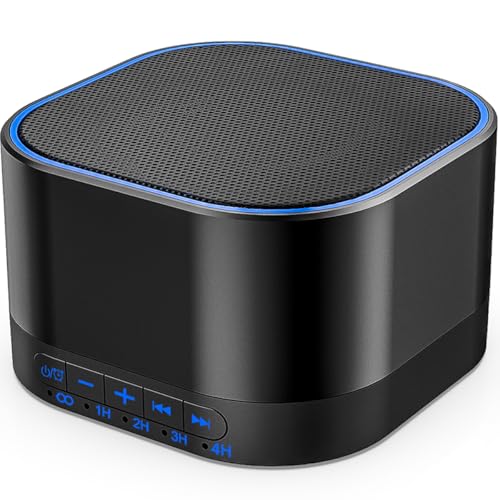
Magicteam Sound White Noise Machine with 20 Non Looping Natural Soothing Sounds and Memory Function 32 Levels of Volume Powered by AC or USB and Sleep Sound Timer Therapy for Baby Kids Adults
- ❤Notice: This sound machine needs to be plugged in for use.
- ❤20 Non-Looping Sleep Sounds: White noise ,Brown noise, pink noise, blue noise, fan,brook, rain, ocean,bird and Bonfire,suitable for for Baby and Kids and Adults.
- ❤Precise Volume & Timer Settings:With 32 Levels of Volume ,it is perfect for baby sleeping .And you can set 1 hour,2 hours,3 hours,4 hours and continuous play,control the comfort level for your own environment.
New starting from: 22.99 $
Go to Amazon
MZOO Luxury Sleep Eye Mask for Side Sleeper Men Women, Zero Eye Pressure 3D Sleeping Mask, Light Blocking Patented Design Night Blindfold, Soft Eye Shade Cover for Travel, Black
- Zero Eye Pressure: The Deepest 13mm arc-shaped widened eye cups provide makeup-safe space and allow natural blinking
- Great for Side Sleepers: Upgraded 15°-curved thin sides ensure smooth transitions with no uncomfortable bulge, minimizing temple pressure for all sleeping positions
- 100% Light Blocking: Patented contoured eye cups seal completely around each eye. Deep 22mm nose padding blocks all light leakage
List Price :
Offer: 13.99 $
Go to Amazon
Weekender Cooling Gel Memory Foam Pillow for Sleeping – Standard Size, Ventilated Cooling Pillow for Side & Back Sleepers, Neck & Shoulder Support, Medium Firm, Washable Cover
- COOLING GEL PILLOW WITH DUAL TEMPERATURE CONTROL: Gel-infused memory foam plus precision ventilation holes continuously pull heat away from your body, so this cooling pillow stays more comfortable all night than traditional foam bed pillows for sleeping.
- MEMORY FOAM SUPPORT FOR SIDE, BACK & STOMACH SLEEPERS: Medium-firm memory foam contours to your head, neck, and shoulders to relieve pressure points and support spinal alignment; ideal for side sleeper pillows, back sleepers, and stomach sleepers.
- MACHINE WASHABLE COVER – EASY BEDROOM ESSENTIAL: Soft zippered polyester cover is easy to remove and fully machine washable and dryer safe; it’s a supportive, washable pillow that keeps your bedroom fresh without extra effort.
New starting from: 29.99 $
Go to Amazon