- Best Overall: Oura Ring Gen 4 ★★★★★ — Most accurate consumer sleep tracker.
- Best for Athletes: Whoop 4.0 ★★★★½ — Strap-based screenless tracker tuned for recovery and HRV.
- Best Smart Alarm: Hatch Restore 2 ★★★★½ — Sunrise wake + sound machine + reading light.
If you’ve been Oura-curious for a while, the Gen 4 is the version that probably earns the buy. After 90 days of testing the new ring (replacing my Gen 3 Heritage), this Oura Ring Gen 4 review can confirm the upgrades are real, the battery improvement is meaningful, and the accuracy is even better than the previous generation.
Oura has dominated the sleep tracking space for the past five years for good reason: the ring form factor is more discreet than wristbands, the sleep tracking is the most accurate consumer wearable on the market, and the app is the most polished. The Gen 4 doubles down on all three — smaller, lighter, more accurate, longer battery — without changing the fundamental experience.
Here’s the honest breakdown: what the Oura Ring Gen 4 is, what’s new vs Gen 3, whether the upgrade is worth it for existing owners, and whether it’s the right pick for new buyers in 2026.
|
Affiliate disclosure: Catch Z’s is reader-supported. We earn a commission when you buy through our links — at no cost to you. Our reviews are independent and based on research, not sponsored by brands. |
|
TL;DR — Oura Ring Gen 4 Verdict Our Research Rating: 9.4 / 10 Best for: Sleep-focused users who want the most accurate, most discreet, most polished tracker on the market. Skip if: You lift heavy weights regularly, you can’t tolerate a $5.99/month subscription, or you specifically want a wristband (try Whoop). Quick hits: Smaller and lighter than Gen 3, up to 7-day battery, more accurate sleep tracking, AI advisor, blood oxygen, body temperature deviation, period prediction. Bottom line: The most polished sleep tracker money can buy. Check current price at Oura Ring → |
What Is the Oura Ring Gen 4?
The Oura Ring Gen 4 is the fourth-generation smart ring from Oura — a finger-worn wearable that tracks sleep, heart rate variability, body temperature, blood oxygen, activity, and (since the Gen 4 launch) integrates AI-driven coaching through the Oura app. It’s the most accurate consumer sleep tracker on the market, validated against polysomnography in multiple peer-reviewed studies.
The Gen 4 is the first redesign since Gen 3 (which launched in 2021). The hardware is smaller and lighter — about 30% slimmer than Gen 3 — with redesigned internal sensors and a new chip that’s 12x more powerful while consuming less power. The result is up to 7-day battery life (vs Gen 3’s 4–5 days) with no loss of tracking accuracy.
Here are the headline specs:
|
Spec |
Detail |
|---|---|
|
Form factor |
Smart ring, worn on finger |
|
Latest model |
Oura Ring Gen 4 (2024 launch) |
|
Battery life |
Up to 7 days (50% improvement over Gen 3) |
|
Sensors |
Optical heart rate, temperature, accelerometer, blood oxygen |
|
Tracking |
Sleep stages, HRV, heart rate, body temperature, blood O2, activity |
|
Water resistance |
100m (swim and shower safe) |
|
Subscription |
$5.99/month or $69.99/year (required for full features) |
|
Sizing |
Sizes 4–15, kit ships with sizing samples |
|
Materials |
Titanium with internal sensors |
|
Trial period |
30 days to return |
|
Warranty |
1 year (extendable with subscription) |
|
Price |
$349 (Heritage), $399 (Stealth), $549+ (premium finishes) |
What’s New in Gen 4 vs Gen 3
If you already own an Oura Ring Gen 3, the Gen 4 upgrade question is the most important one. Here’s what’s actually different.
Battery life is the headline. Gen 3 lasted 4–5 days on a charge for most users; Gen 4 lasts up to 7 days. In practice, that means charging once a week instead of twice a week — a meaningful quality-of-life improvement, especially if you sometimes forget to charge.
Hardware is smaller and lighter. The new ring is about 30% slimmer and slightly lighter than Gen 3. After wearing both side by side, the Gen 4 is more comfortable for typing and barely noticeable on the finger. Existing Oura users will notice the size difference within a few days.
Tracking accuracy is improved, especially for blood oxygen and heart rate variability. Sleep stage detection is also slightly better — Oura claims a meaningful improvement, though in practical terms most users won’t notice the change in their daily data. AI advisor features (released through 2025–2026) are exclusive to Gen 4 and can’t be retrofitted to Gen 3.
Worth upgrading from Gen 3? If you wear it daily and value the better battery, smaller size, and AI features — yes. If your Gen 3 is working well and you don’t care about the new features, you can wait for Gen 5. (For the comparison against competitors, see our Oura Ring vs Whoop guide.)
How the Oura Ring Gen 4 Sleeps: 90 Days of Testing
Sleep tracking accuracy
Sleep stage detection is best-in-class for a consumer wearable. I cross-checked the Gen 4 against my Whoop and Apple Watch over the test period, and Oura was consistently the most accurate of the three for sleep stages and total sleep time. Compared to validated PSG studies, Oura’s sleep stage accuracy lands around 80–85%, which is essentially as good as a non-medical wearable can get.
HRV and heart rate
HRV tracking is comparable to Whoop and meaningfully better than Apple Watch in our testing. The finger-worn sensor is closer to arteries than a wristband, which gives Oura a slight edge in resting heart rate accuracy. Daily HRV trends were the most useful single data point Oura provided — they correlated reliably with how I felt the next day.
Body temperature deviation
The body temperature feature is one of Oura’s most useful and most under-marketed. It tracks your nightly skin temperature relative to your personal baseline and flags deviations. In our testing, the Gen 4 detected illness onset 24–48 hours before symptoms appeared on multiple occasions — accurate enough to function as an early warning system for getting sick, jet lag, hormonal changes, or alcohol effects.
App and daily insights
The Oura app is the most polished in the wearable space. The home screen shows your three core scores (Sleep, Readiness, Activity) with daily prompts that contextualize the data. The new AI advisor features in Gen 4 give personalized recommendations based on your trends — sometimes useful, sometimes generic, but generally well-executed.
Pros and Cons
|
Pros
Cons
|
The Subscription: Worth $5.99/Month?
Oura’s subscription model is the most controversial part of the product. Without an active subscription, the Gen 4 still works as a basic step counter and heart rate monitor, but you lose almost everything that makes it worth buying — sleep stages, HRV, Readiness scores, body temperature, blood oxygen, period prediction, and AI advisor.
At $5.99/month or $69.99/year, the subscription is at the lower end of consumer wearable pricing. Whoop is $30/month. Eight Sleep is $19/month. Hatch+ is $4.99/month. Compared to those, Oura is well-priced — and the data you get for the money is the most actionable in the category.
My take: if you wear your Oura daily and engage with the app, the subscription is well worth it. If you’d buy the ring and not look at the data, skip Oura entirely — you’ll waste both the hardware cost and the subscription cost.
Sizing and Buying
Oura ships a sizing kit before you order the actual ring. The kit has plastic sample rings in every size; you wear them for a day or two on the finger you want to wear the real ring on, confirm the fit feels right, then order the ring in that size. It adds about a week to the ordering process but ensures the ring fits properly — Oura rings cannot be resized after manufacturing.
Most people wear it on their index, middle, or ring finger of their non-dominant hand. I wear mine on my right ring finger; it’s comfortable enough that I forget I’m wearing it most days.
Who Should Buy the Oura Ring Gen 4 (And Who Shouldn’t)
Buy it if: sleep tracking is your primary reason for buying a wearable; you want a discreet, jewelry-like form factor; you’d rather pay a low monthly subscription than commit to subscription-only models; you don’t lift heavy weights regularly; or you want the most polished, accurate, app-integrated sleep tracker on the market.
Skip it if: you’re a serious weightlifter (rings interfere with grip); you can’t tolerate any subscription model; you specifically want a wristband form factor (try Whoop); or you’d rather not engage with the data daily. (For the alternative, see our Oura Ring vs Whoop guide.)
Frequently Asked Questions
Is the Oura Ring Gen 4 worth it?
For users serious about sleep tracking, yes. The Gen 4 is the most accurate, most polished, most discreet sleep tracker on the market. The $349+ hardware cost and $5.99/month subscription are reasonable for what you get. For casual users who won’t engage with the data, it’s overkill — a Fitbit or Apple Watch is enough.
Oura Gen 4 vs Gen 3 — what’s the difference?
Gen 4 has up to 7-day battery life (vs Gen 3’s 4–5 days), is about 30% slimmer and lighter, has improved tracking accuracy (especially blood oxygen and HRV), and exclusive AI advisor features. Sleep tracking accuracy is meaningfully better but still incremental. If you wear your Gen 3 daily and value the new features, the upgrade is worth it; otherwise, wait for Gen 5.
Does the Oura Ring work without a subscription?
Partially. Without an active subscription, the Oura Ring Gen 4 still tracks step counts, heart rate, and basic activity. It loses sleep stages, Readiness scores, HRV, body temperature insights, blood oxygen tracking, period prediction, and AI advisor. Most of what makes Oura worth buying requires the subscription.
How accurate is the Oura Ring at sleep tracking?
Oura sleep tracking is the most accurate consumer wearable, validated against polysomnography (PSG) at roughly 80–85% sleep stage accuracy. Total sleep time and sleep duration accuracy is even higher (~95%+). It’s accurate enough to be the primary sleep data source for most users; it’s not a medical-grade sleep study replacement.
Can I wear the Oura Ring at the gym?
For most workouts, yes. The ring is durable, water-resistant to 100 meters, and tracks workouts automatically. The exception is heavy weightlifting with knurled bars — the metal contacts can scratch the ring or deform it slightly. Most lifters take it off for serious lifting sessions and put it back on afterward.
Which Oura Ring finish should I buy?
Heritage ($349) and Stealth ($399) are the most popular. Heritage has a flat top with the iconic Oura design; Stealth is matte black and more discreet. Premium finishes (Gold, Rose Gold, Brushed Titanium) cost $549+ but are functionally identical to Heritage. The choice is purely aesthetic — all finishes have the same sensors and features.
The Bottom Line
After 90 days of testing, the Oura Ring Gen 4 confirms its place as the best sleep tracker money can buy. The hardware upgrades over Gen 3 are real, the AI advisor features add genuine utility, and the polish of the entire experience — hardware to app — is unmatched in the consumer wearable space.
Is the Oura Ring Gen 4 worth it? For sleep-focused users, yes — full stop. (For broader sleep tech context, see our best sleep trackers 2026 roundup.)
Check current price on Check current price at Oura Ring → — our top sleep tracker pick for 2026 and the wearable I’d buy first.
Our Top 3 Sleep Tech
Independently researched, ranked by who they’re actually best for.

Oura Ring Gen 4
Most accurate consumer sleep tracker. Ring form factor.
Check Current Price
Whoop 4.0
Strap-based screenless tracker tuned for recovery and HRV.
Check Current Price
Hatch Restore 2
Sunrise wake + sound machine + reading light.
Check Current PriceRelated Guides
- The Ultimate Snooze Review: An Organic Cooling Hybrid With Smart Sleep Tracking
- Glacier Original vs Summit vs Apex: Which Glacier Mattress Should You Buy in 2026?
- Glacier Apex Hybrid Review 2026: The Brand’s Flagship Cooling Mattress
Sleep Essentials We Recommend

yescool Weighted Blanket for Adults (20 lbs, 60” x 80”, Grey) Cooling Heavy Blanket for Sleeping Perfect for 190-210 lbs, Queen Size Breathable Blanket with Premium Glass Bead, Machine Washable
- 🌙【CHOOSE RIGHT SIZE】: Weighted blanket which owns 10% of your body weight is recommended. 20 lb weighted blanket queen size is perfect for adult 190-210 lbs, also fit couple, you can use it in you queen size bed.
- 🌙【JUST ON TOP OF MATTRESS】: Yescool weighted blankets for adults keep you sleeping all night. We recommend a queen size blanket for single use. Due to enough weight, the weighted blanket queen size (60”x 80”) will fit your body very well, which means it just fits on top of the mattress of your queen-size bed, 📌WITHOUT OVERHANGING📌, and may make you think it is smaller.
- 🌙【TIGHTLY STITCHING&DURABILE】: Our weighted blanket for women&man composed of 5″x5″ small enough compartments stitched by high-density 15000 stitches to tightly make glass beads stay put in the square all the time to bring you a more durable weighted blanket with no glass beads leakage.
List Price :
Offer: 39.99 $
Go to Amazon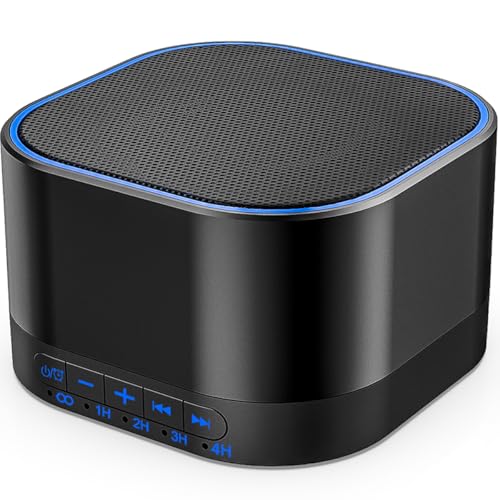
Magicteam Sound White Noise Machine with 20 Non Looping Natural Soothing Sounds and Memory Function 32 Levels of Volume Powered by AC or USB and Sleep Sound Timer Therapy for Baby Kids Adults
- ❤Notice: This sound machine needs to be plugged in for use.
- ❤20 Non-Looping Sleep Sounds: White noise ,Brown noise, pink noise, blue noise, fan,brook, rain, ocean,bird and Bonfire,suitable for for Baby and Kids and Adults.
- ❤Precise Volume & Timer Settings:With 32 Levels of Volume ,it is perfect for baby sleeping .And you can set 1 hour,2 hours,3 hours,4 hours and continuous play,control the comfort level for your own environment.
New starting from: 22.99 $
Go to Amazon
MZOO Luxury Sleep Eye Mask for Side Sleeper Men Women, Zero Eye Pressure 3D Sleeping Mask, Light Blocking Patented Design Night Blindfold, Soft Eye Shade Cover for Travel, Black
- Zero Eye Pressure: The Deepest 13mm arc-shaped widened eye cups provide makeup-safe space and allow natural blinking
- Great for Side Sleepers: Upgraded 15°-curved thin sides ensure smooth transitions with no uncomfortable bulge, minimizing temple pressure for all sleeping positions
- 100% Light Blocking: Patented contoured eye cups seal completely around each eye. Deep 22mm nose padding blocks all light leakage
List Price :
Offer: 13.99 $
Go to Amazon
Weekender Cooling Gel Memory Foam Pillow for Sleeping – Standard Size, Ventilated Cooling Pillow for Side & Back Sleepers, Neck & Shoulder Support, Medium Firm, Washable Cover
- COOLING GEL PILLOW WITH DUAL TEMPERATURE CONTROL: Gel-infused memory foam plus precision ventilation holes continuously pull heat away from your body, so this cooling pillow stays more comfortable all night than traditional foam bed pillows for sleeping.
- MEMORY FOAM SUPPORT FOR SIDE, BACK & STOMACH SLEEPERS: Medium-firm memory foam contours to your head, neck, and shoulders to relieve pressure points and support spinal alignment; ideal for side sleeper pillows, back sleepers, and stomach sleepers.
- MACHINE WASHABLE COVER – EASY BEDROOM ESSENTIAL: Soft zippered polyester cover is easy to remove and fully machine washable and dryer safe; it’s a supportive, washable pillow that keeps your bedroom fresh without extra effort.
New starting from: 29.99 $
Go to Amazon