
- Best Overall: Saatva Classic ★★★★★ — Luxury hybrid with three firmness options.
- Best for Side Sleepers: Helix Midnight ★★★★½ — Hybrid construction with targeted pressure relief at shoulders and hips.
- Best Value: Nectar ★★★★½ — Memory foam with a 365-night trial and lifetime warranty.
Your bedtime routine for adults is one of the highest-leverage sleep optimizations you can make — more impactful than the right mattress, more reliable than supplements, and free. The catch is consistency: a bedtime routine only works if you actually do it most nights, and most adults skip the routine entirely or do it inconsistently.
This guide is the science-backed evening plan I’ve used myself for over a year, refined based on what actually moves the needle on sleep quality. It’s specifically designed for adults — not generic advice that ignores how busy adults live, but a realistic 60-minute routine you can actually maintain even on stressful weeks.
Short version: 60 minutes before bed, your phone goes to the kitchen and your lights dim. 30 minutes before, screens go off. 15 minutes before, you cool the bedroom and get into bed. Lights out at the same time every night. The whole protocol is designed to give your circadian rhythm consistent signals about when sleep is coming, which makes the actual falling-asleep part much easier. Here’s the detailed plan.
|
Affiliate disclosure: Catch Z’s is reader-supported. We earn a commission when you click product links — at no cost to you. Every product mentioned is one we’ve tested. |
|
TL;DR — The 60-Minute Bedtime Routine 60 min before bed: Phone goes to the kitchen. Dim lights. Switch to lamps and warm bulbs. 30 min before bed: No screens. Read a book, talk to your partner, take supplements. 15 min before bed: Cool down the bedroom (65–68°F). Get into bed. In bed: Light reading, journaling, or breathing exercises. Lights out at the same time every night. The consistency is half the magic. |
Why Bedtime Routines Actually Work
Your circadian rhythm is the master clock that regulates your sleep-wake cycle, body temperature, hormone production, and energy levels throughout the day. It runs on roughly a 24-hour schedule and depends on consistent environmental cues — primarily light, but also temperature, food timing, and behavioral patterns — to stay in sync.
A bedtime routine works because it gives your circadian rhythm the same set of cues every night. Dimming lights, reducing screen time, dropping bedroom temperature, and engaging in calming activities all signal your body that sleep is coming. Within 1–2 weeks of consistent routine, your circadian rhythm starts anticipating sleep at your target time — you become tired naturally as bedtime approaches, instead of forcing yourself to sleep through racing thoughts and a wired nervous system.
The science is solid. Multiple peer-reviewed studies show that consistent bedtime routines improve sleep onset, sleep depth, and total sleep time. The effect is largest for users with mild-to-moderate insomnia. (For more on the underlying biology, see our sleep cycles explained guide.)
60 Minutes Before Bed: The Setup Phase
This is the start of the routine and the most important boundary to defend. Sixty minutes before your target bedtime, three things happen: your phone leaves the bedroom, the lights dim, and you transition out of work or stimulating activities.
Your phone goes to the kitchen (or anywhere outside the bedroom). This is the highest-leverage sleep change most adults can make, and the hardest. The phone in the bedroom — even on silent, even face-down, even “just in case” — is the single biggest reason adults have trouble winding down. Removing it removes the temptation to scroll, the blue light from notifications, and the morning-alarm-equals-notification-anxiety pattern that wrecks mornings. (See our Loftie Clock review or Hatch Restore 2 review for phone-free alarm clock options.)
Lights dim. Switch from overhead lights (which often use bright, cool-color bulbs) to lamps with warm-color bulbs. If you have smart bulbs, schedule them to auto-dim at this point. The drop in light intensity signals your circadian rhythm to start producing melatonin — your natural sleep hormone.
Wrap up work and stimulating activities. Stop checking email. Stop watching news that makes you anxious. Start a transition activity that lets your nervous system shift out of work-mode: a low-stakes hobby, conversation with a partner or family member, a walk if weather allows, or a relaxing activity like cooking or making tea.
30 Minutes Before Bed: The Wind-Down Phase
This is the no-screens phase. Thirty minutes before your target bedtime, all screens go off — TV, laptop, tablet, anything backlit. Phones are already in the kitchen from the previous phase. The wind-down phase is for analog activities only.
Reading is the gold standard wind-down activity. Physical books or a Kindle Paperwhite (which uses non-backlit e-ink) work without disrupting sleep. Avoid books that are too engaging or stressful — fiction works better than work-related reading; lighter genres work better than thrillers right at bedtime.
If reading isn’t your thing, alternatives include journaling (especially gratitude or to-do dumps that get tomorrow’s tasks out of your head), light stretching or yoga, listening to calming audio (audiobook, sleep stories, calming podcasts via smart alarm clocks), or having a real conversation with someone you live with.
This is also when you take sleep supplements if you use them — magnesium, L-theanine, or a pre-blended stack like Beam Dream Powder, taken 30–60 minutes before bed for optimal effect. (See our best sleep supplements guide for picks.)
15 Minutes Before Bed: The Bedroom Phase
Fifteen minutes before bedtime, transition to your bedroom. The bedroom should already be dark or dimming (blackout curtains closed if applicable), cool (heading toward 65–68°F), and quiet (white noise machine on if your environment has noise pollution).
Brush teeth, do skincare, change into sleepwear. The mechanical activities of getting ready for bed are themselves part of the routine — they signal your body that sleep is imminent. Many sleep researchers recommend doing these activities in the same order every night to build the habit-cue association.
If you use blackout curtains, sleep mask, or earplugs, deploy them now. (See our best blackout curtains guide or best sleep mask guide for picks.)
Get into bed at the target time. Many adults talk themselves out of going to bed at the planned hour because they’re not yet sleepy — but that’s exactly when the routine breaks down. Get into bed even if you don’t feel tired yet; the routine works best when bedtime is consistent, not weather-dependent on whether you feel ready.
In Bed: The Falling-Asleep Phase
Once in bed, the goal is to transition smoothly into sleep. Most adults reach for their phone here (which is why the phone is in the kitchen — you can’t reach it). Instead, choose one of three calming activities: light reading (5–10 pages, fiction or low-stakes content), a guided breathing exercise (4-7-8 breathing or box breathing for 5 minutes), or a body scan meditation (10 minutes, mentally checking in with each body region from feet to head).
Avoid lying awake worrying. If you can’t fall asleep within 20 minutes of getting into bed, get up briefly — go to a dim room, do something boring (reading a paragraph at a time, slow stretching), and return to bed when you feel sleepy. Lying awake in bed for 30+ minutes builds a brain association between bed and wakefulness, which makes future insomnia worse.
Lights out at your target time. The actual moment of turning off the bedside light is the final cue your circadian rhythm needs to commit to sleep. If you’ve followed the previous phases, you’ll usually fall asleep within 10–15 minutes of lights-out.
Morning: The Routine That Reinforces the Bedtime Routine
Your bedtime routine works best when paired with a consistent morning routine, because they reinforce each other through your circadian rhythm. The key morning components: wake at the same time every day (within 30 minutes of your target wake time, even on weekends), get bright light within the first hour of waking (sunlight is best, sunrise alarm clocks help in winter), and avoid checking your phone for at least 30 minutes after waking. (Smart alarm clocks like the Hatch Restore 2 simulate sunrise to help with this in dark months.)
Caffeine timing matters. Caffeine has a 6-hour half-life; coffee at 4pm is still 25% active at 10pm. If you’re sleep-sensitive, cut off caffeine by 2pm at the latest. If you’re more sensitive, cut off by 12pm. The earlier the cutoff, the better your evening wind-down works.
Exercise timing: morning or early-afternoon exercise improves sleep quality. Late evening intense exercise (within 3 hours of bed) can disrupt sleep onset for some users; light evening exercise (a walk, gentle yoga) is fine and may help.
How to Build Consistency (The Hardest Part)
Knowing the routine isn’t the problem; doing it consistently is. The most common failure modes: starting too ambitiously (trying to do all 60 minutes perfectly from day one), letting weekends destroy weekday consistency, and abandoning the routine entirely the first time it doesn’t work.
The fix is to start small. Pick the single highest-leverage change first — the phone leaving the bedroom — and do that for 2 weeks. Once that’s automatic, add the lights-dim cue. Once that’s automatic, add the no-screens 30-minute window. Build the routine in layers over 2 months rather than trying to install all of it at once.
Weekend consistency is non-negotiable for the routine to work. Going to bed at midnight on Saturday when your normal bedtime is 10:30pm causes “social jet lag” — a circadian rhythm disruption that takes 2–3 nights to recover from. If you must stay up later on weekends, cap it at 1 hour past your normal bedtime; anything more disrupts the next week’s sleep.
If you live with a partner, the routine works best as a shared household standard. Sync wind-down times, agree on bedroom temperature, and respect each other’s bedtime cues. Disagreements about bedtime habits often stem from the lack of an explicit routine — making the routine collaborative usually fixes the conflict. (For more household sleep optimization, see our perfect sleep environment guide.)
Frequently Asked Questions
How long should a bedtime routine be?
60 minutes is the sweet spot. Less than 30 minutes doesn’t give your nervous system enough time to wind down; more than 90 minutes is impractical for most adults to maintain. The 60-minute structure (60-30-15) covers the key transitions — phone exit, screen exit, bedroom transition — without being unrealistic.
Does a bedtime routine actually work for insomnia?
For mild-to-moderate insomnia, yes. Studies show consistent bedtime routines reduce sleep onset time, increase total sleep time, and improve sleep quality. For severe or chronic insomnia, the routine is necessary but may not be sufficient — supplements, environment optimization, and sometimes medical evaluation are needed. The routine is the foundation; other interventions stack on top.
Should I keep the same bedtime on weekends?
Yes, within 30–60 minutes. Going to bed dramatically later on weekends causes social jet lag that disrupts the next week’s sleep quality. Saturday-night-late, Sunday-night-impossible-to-fall-asleep is the classic pattern. Keep weekends within an hour of weekday bedtime to avoid the disruption.
What if I can’t fall asleep within 20 minutes?
Get out of bed and do something boring in a dim room — slow stretching, paragraph-by-paragraph reading, gentle breathing exercises. Return to bed when you feel sleepy. Lying awake in bed for 30+ minutes trains your brain to associate the bed with wakefulness, which makes future sleep harder. The “get out of bed” rule is one of the most well-established sleep hygiene principles.
How long until my bedtime routine starts working?
1–2 weeks for the routine to become automatic. 2–4 weeks for sleep quality improvements to become measurable. Stick with it consistently for at least a month before evaluating effectiveness. Consistency is the entire point — if you do the routine 4 nights and skip 3, you’ll never see the cumulative benefit.
Can I read on my Kindle as part of the routine?
Yes, on a Paperwhite or other e-ink Kindle. The e-ink screens don’t emit blue light the way phone screens do, so they don’t disrupt melatonin production. Avoid Kindle Fire tablets and other backlit e-readers — those have the same blue light issue as phones.
The Bottom Line
If you only remember one thing from this guide: a consistent bedtime routine is the single highest-leverage free sleep change you can make. The exact details matter less than the consistency — the same set of cues every night trains your circadian rhythm to anticipate sleep, which makes falling asleep happen automatically rather than requiring willpower.
Start with the phone in the kitchen, dim lights at 60 minutes, no screens at 30 minutes, and the same bedtime every night. Build from there. (For broader sleep optimization, see our perfect sleep environment guide and best sleep supplements guide.)
Stop fighting your sleep with chaos. Build the routine, do it consistently, and the sleep follows.
Our Top 3 Mattresses
Independently researched, ranked by who they’re actually best for.

Saatva Classic
Luxury hybrid with three firmness options. The most consistently recommended premium pick.
Check Current Price
Helix Midnight
Hybrid construction with targeted pressure relief at shoulders and hips.
Check Current Price
Nectar
Memory foam with a 365-night trial and lifetime warranty.
Check Current PriceRelated Guides
- Screen Time Before Bed: How Phones Wreck Your Sleep
- Best Bed Cooling Systems 2026: Active Cooling for Hot Sleepers
- Best Night Guards for Teeth Grinding 2026: Bruxism Solutions
Sleep Essentials We Recommend

yescool Weighted Blanket for Adults (20 lbs, 60” x 80”, Grey) Cooling Heavy Blanket for Sleeping Perfect for 190-210 lbs, Queen Size Breathable Blanket with Premium Glass Bead, Machine Washable
- 🌙【CHOOSE RIGHT SIZE】: Weighted blanket which owns 10% of your body weight is recommended. 20 lb weighted blanket queen size is perfect for adult 190-210 lbs, also fit couple, you can use it in you queen size bed.
- 🌙【JUST ON TOP OF MATTRESS】: Yescool weighted blankets for adults keep you sleeping all night. We recommend a queen size blanket for single use. Due to enough weight, the weighted blanket queen size (60”x 80”) will fit your body very well, which means it just fits on top of the mattress of your queen-size bed, 📌WITHOUT OVERHANGING📌, and may make you think it is smaller.
- 🌙【TIGHTLY STITCHING&DURABILE】: Our weighted blanket for women&man composed of 5″x5″ small enough compartments stitched by high-density 15000 stitches to tightly make glass beads stay put in the square all the time to bring you a more durable weighted blanket with no glass beads leakage.
List Price :
Offer: 39.99 $
Go to Amazon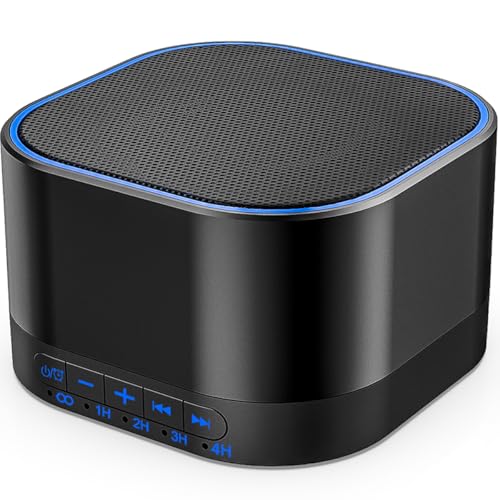
Magicteam Sound White Noise Machine with 20 Non Looping Natural Soothing Sounds and Memory Function 32 Levels of Volume Powered by AC or USB and Sleep Sound Timer Therapy for Baby Kids Adults
- ❤Notice: This sound machine needs to be plugged in for use.
- ❤20 Non-Looping Sleep Sounds: White noise ,Brown noise, pink noise, blue noise, fan,brook, rain, ocean,bird and Bonfire,suitable for for Baby and Kids and Adults.
- ❤Precise Volume & Timer Settings:With 32 Levels of Volume ,it is perfect for baby sleeping .And you can set 1 hour,2 hours,3 hours,4 hours and continuous play,control the comfort level for your own environment.
New starting from: 22.99 $
Go to Amazon
MZOO Luxury Sleep Eye Mask for Side Sleeper Men Women, Zero Eye Pressure 3D Sleeping Mask, Light Blocking Patented Design Night Blindfold, Soft Eye Shade Cover for Travel, Black
- Zero Eye Pressure: The Deepest 13mm arc-shaped widened eye cups provide makeup-safe space and allow natural blinking
- Great for Side Sleepers: Upgraded 15°-curved thin sides ensure smooth transitions with no uncomfortable bulge, minimizing temple pressure for all sleeping positions
- 100% Light Blocking: Patented contoured eye cups seal completely around each eye. Deep 22mm nose padding blocks all light leakage
List Price :
Offer: 13.99 $
Go to Amazon
Weekender Cooling Gel Memory Foam Pillow for Sleeping – Standard Size, Ventilated Cooling Pillow for Side & Back Sleepers, Neck & Shoulder Support, Medium Firm, Washable Cover
- COOLING GEL PILLOW WITH DUAL TEMPERATURE CONTROL: Gel-infused memory foam plus precision ventilation holes continuously pull heat away from your body, so this cooling pillow stays more comfortable all night than traditional foam bed pillows for sleeping.
- MEMORY FOAM SUPPORT FOR SIDE, BACK & STOMACH SLEEPERS: Medium-firm memory foam contours to your head, neck, and shoulders to relieve pressure points and support spinal alignment; ideal for side sleeper pillows, back sleepers, and stomach sleepers.
- MACHINE WASHABLE COVER – EASY BEDROOM ESSENTIAL: Soft zippered polyester cover is easy to remove and fully machine washable and dryer safe; it’s a supportive, washable pillow that keeps your bedroom fresh without extra effort.
New starting from: 29.99 $
Go to Amazon